
School of Health, Sport and Bioscience
School of Health, Sport and Bioscience

Hero Carousel
Industry links
Many of our courses boast strong links with prestigious industry partners including West Ham United and Great Ormond Street Hospital as well as excellent collaborations across primary and social care with Barts NHS Health Trust, Barking, Havering and Redbridge NHS Trust and North East London Healthcare Trust.
Research Excellence
92 per cent of UEL's overall research was recognised as world-leading, internationally excellent or internationally recognised (REF 2021)
Financial Support
All degree-level nursing and many allied health students on courses from September 2021 will receive a training grant of at least £5,000 a year from the government.
Who we are
The School of Health, Sport and Bioscience (HSB) is a leader in providing hands-on, experience-led teaching across multiple disciplines in biological and chemical sciences, healthcare and sports.
As a careers-first university, we are proud of our industry links. You will be able to study closely alongside local NHS trusts, private healthcare providers and professional sports teams.
The School of Health, Sport and Bioscience at the University of East London is a leader in providing integrated teaching in Biological and Chemical Sciences, Healthcare and Sports.
You will gain valuable experience working across a range of specialisms with industry leading organisations such as West Ham United Foundation as well as pioneering NHS trusts and partners such as Great Ormond Street Hospital and HCA Healthcare.
We have excellent on-campus facilities, including our multi-million-pound SportsDock facility, bioscience labs and the state of the art clinical simulation building that supports our nursing and allied health degrees.
Our courses focus on practice-based experiences and research projects linking with both the regional London community and nationally renowned agencies. We provide you with opportunities to make an impact locally as well as globally.
- Our degrees prepare you to make an impact on the world both locally and globally.
- Our industry links will give you contact time with potential future employers.
- SportsDock provides a world-class environment for our sports courses to transform learning into doing.
- Our nursing courses were shortlisted in four categories in the Student Nursing Times Awards (2020).
- University staff and students have volunteered their clinical expertise and skills at NHS Nightingale, including nursing, physiotherapy and technician teams, as well as staff and students volunteering for non-clinical support.
- Emma Andersson, one of our BSc Physiotherapy students, observed a first for UK medicine in which a woman had a brain tumour removed successfully while playing her violin during the procedure.
Many of our courses are accredited by the relevant industry bodies. Our accreditations include:
- Society of Sports Therapists
- Nursing and Midwifery Council (NMC)
- The Health and Care Professions Council (HCPC)
- Royal College of Occupational Therapists (RCOT)
- Chartered Society of Physiotherapy (CSP)
- SkillsActive
- The British Association of Sport and Exercise Sciences
- Institute of Biomedical Science
- Royal Society of Chemistry
- Academy of Pharmaceutical Sciences
The School has a growing network of partnerships and we are committed to extending learning, research and creative practice through partnership and collaboration. Our strong links with prestigious industry partners allows us to offer our students invaluable and unforgettable experiences out in the field. Our current partners include:
Explore our subject areas

Medical Sciences
On our medical science courses you will be immersed in practical work from the very start of your degree. We are ranked sixth among all UK universities for graduate prospects in Biomedical Sciences.
Browse Medical Sciences courses
Nursing
Nursing at UEL has excellent partnerships and apprenticeship routes in the North East London networks. Learn on the job with our NHS trust partners.
Browse Nursing courses
Allied and Public Health Professions
Help transform people's lives on our ground-breaking Allied & Public Health courses. This important and rewarding work can change your life.
Browse Public Health courses
Sport
Our sports department consistently ranked amongst the top three universities for sport in London by our students.
Browse Sport coursesFacilities
UEL houses both sports science and sports therapy labs at our Docklands campus and biomechanics laboratories in Stratford - both serviced by full-time laboratory technicians. The sports science facility allows the assessment of fitness components from those that are vital for every day health to those important for elite performance. The sports therapy lab, along with the sports therapy clinic, allows you to gain much needed applied, practical experience.
Recently, £2.5 million was spent on a new high-tech bioscience lab at our Stratford campus, increasing teaching space by 150% and creating more space for project and collaborative work.
Our Centre for Clinical Education provides clinical training facilities in podiatry and physiotherapy as well as adult nursing. The Centre is London's only provider of clinical and training facilities in podiatry and builds on our excellent reputation as a provider of education in physiotherapy, podiatry, sports science, professional health studies and subjects allied to medicine. Our Simulation Centre boasts cutting-edge tools including 'Stan', a high-tech patient simulator mannequin.
Research
Our research has impact both locally and globally.
Our internationally-renowned former Institute for Health and Human Development (IHHD), regularly carried out research across the UK and also overseas. Its Reach Pregnancy programme worked with Barts Health NHS Trust to improve access to antenatal care for pregnant women living in areas with high levels of poverty and high ethnic diversity.
Other key research groups in HSB include our Medicines Research Group led by Dr Mukhlesur Rahman and the Applied Sport Sciences Research Group, led by Dr Andy Galbraith.
For more information on our research interests and groups, and research degrees, visit our Research page.
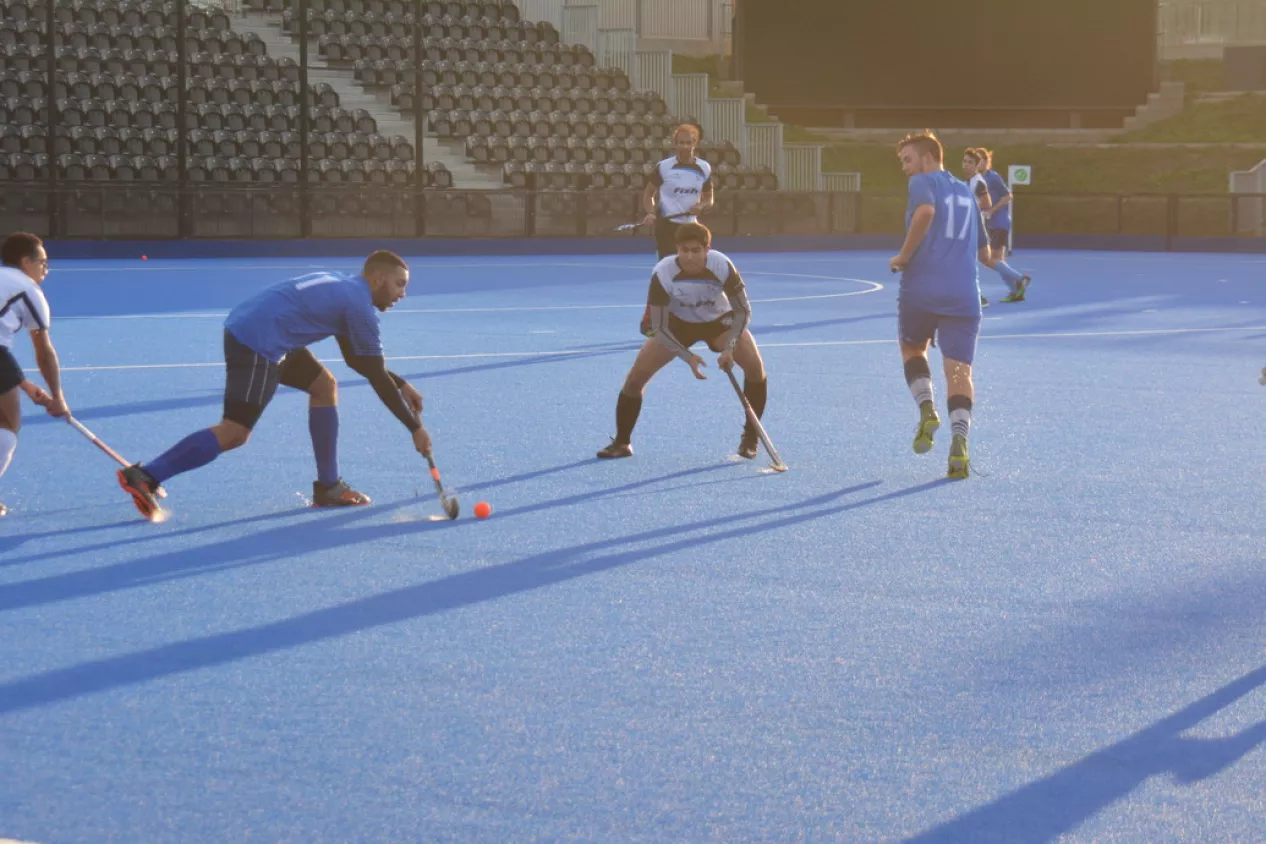
I chose UEL because they offered the course I wanted to study and saw the progress they were making in sports. Previous students told me how good the lecturers were at delivering the course. Being at UEL opened up some great opportunities for me, including working with the US Olympic team and placements at Leyton Orient Football Club and Mile End Hospital."
Samuel Amponsah
Sport and Exercise Science, BSc (Hons)